Eucharistic Miracles: Why They're About More Than Proof
Eucharistic Miracles Aren't the Destination. They're an Invitation.
One of the things I appreciate most about Jesus is that He rarely leaves us where we are.
Throughout the Gospels, people came to Him for all kinds of reasons. Some wanted healing. Some wanted answers. Others simply wanted to see what everyone was talking about. Yet time after time, Jesus took whatever first captured their attention and used it to lead them somewhere deeper.
I think that's exactly why conversations about Eucharistic miracles matter.
For many people, they're fascinating. Stories of consecrated hosts that have undergone scientific examination and appear to contain living heart tissue naturally raise questions. Whether you've heard of the miracles in Buenos Aires, Tixtla, or Sokółka, it's understandable to wonder how these events could happen and what they mean.
Those questions are worth asking.
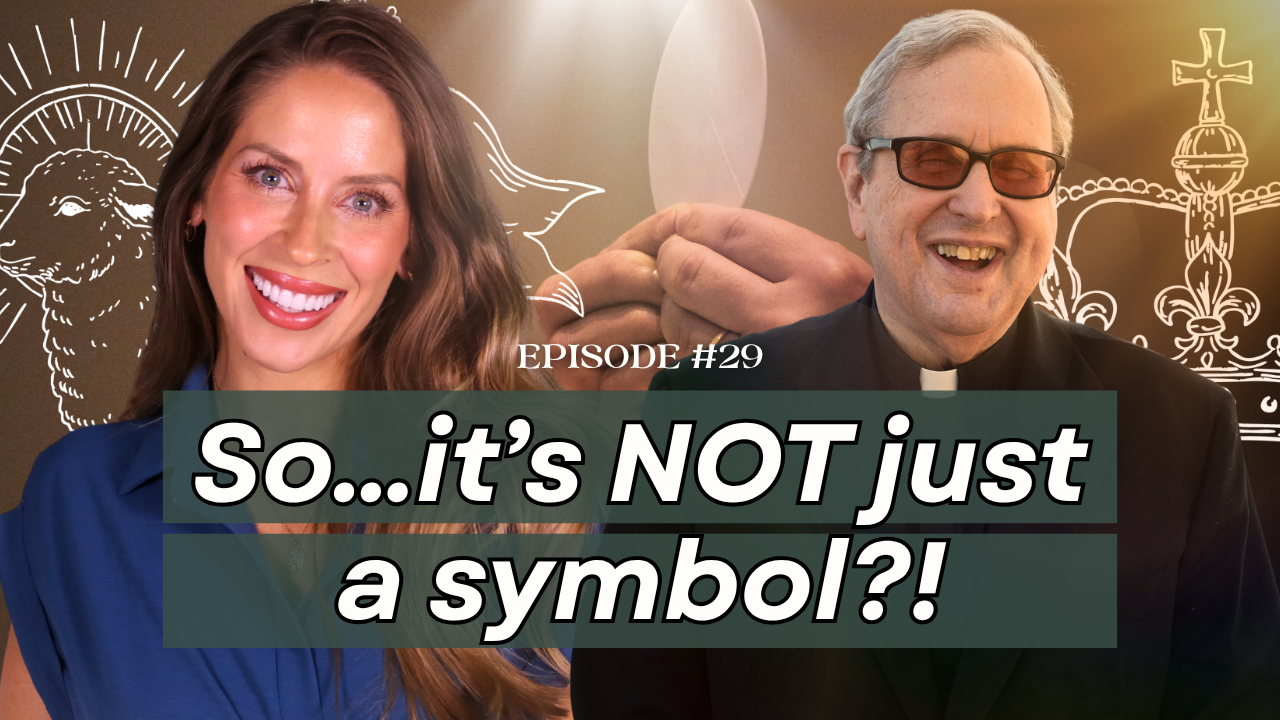
But after sitting down with Father Spitzer on this week's episode of the Lighten Up Podcast, I found myself thinking about something else.
What if the miracles themselves aren't the destination?
What if they're simply pointing us toward Jesus?
Miracles Have Always Been Signs
When you read the Gospels, Jesus performs miracle after miracle. He heals the blind, raises the dead, calms storms, and feeds thousands with a few loaves of bread.
Yet He never performs miracles simply to impress people.
Every miracle reveals something about who He is.
The same can be said of the Eucharistic miracles that have been investigated in recent decades. Whether someone finds them compelling or approaches them with caution, they invite us to ask a question that reaches far beyond science.
What did Jesus actually mean when He said, "This is my body"?
That question has challenged Christians for centuries, but it becomes especially personal when you open John 6 and slowly read Jesus' words about being the Bread of Life. He doesn't soften His language when people become uncomfortable. In fact, many disciples leave because what He says is difficult to accept.
I've read that passage many times throughout my life.
This time, I couldn't read it quite the same way.
My Curiosity Became Hunger
If you've listened to the podcast for any length of time, you know I didn't grow up Catholic.
I grew up loving Jesus in a Protestant church. Communion was meaningful to me because it reminded us of Christ's sacrifice. I never questioned that understanding because it was all I had ever known.
Then I started studying Church history.
I discovered that Christians for well over a thousand years universally believed that the Eucharist was far more than a symbol. The more I read the writings of the early Church Fathers and revisited passages like John 6, the more I realized I had never really wrestled with what Jesus was saying.
I wasn't trying to prove anyone wrong.
I simply wanted to know what was true.
That pursuit didn't begin with certainty.
It began with curiosity.
Over time, curiosity became something much deeper.
It became hunger.
We All Know What Spiritual Hunger Feels Like
I think every Christian has experienced seasons where something feels unfinished.
We read Scripture.
We pray.
We serve.
We attend church faithfully.
Yet there can still be a quiet longing that is difficult to explain.
Sometimes we assume we need another Bible study, another conference, or another podcast episode. Those things are wonderful gifts, and God often uses them to help us grow.
But maybe our deepest hunger has never been for more information.
Maybe it's always been for greater intimacy with Christ.
That was one of my biggest takeaways from this conversation.
Father Spitzer described the Eucharist as Jesus giving us His whole self—His body, blood, soul, and divinity. He also described the fruits Christians have associated with receiving the Eucharist throughout history: forgiveness, belonging, peace, protection, transformation, and communion with the family of God.
Whether you're already Catholic or simply exploring these ideas for the first time, those promises point to something every heart longs for.
We want to know we're forgiven.
We want peace that isn't dependent on our circumstances.
We want to belong.
We want to know God is near.
Questions Aren't the Enemy of Faith
One of my favorite parts of my own journey has been discovering that God isn't threatened by sincere questions.
Questions don't automatically lead people away from faith.
Many times, they're the very thing God uses to bring us closer to Him.
If you're reading this and you've never seriously looked into what Christians historically believed about the Eucharist, I'd encourage you not to dismiss the conversation before exploring it yourself.
Read John 6.
Read 1 Corinthians 10 and 11.
Read the writings of the earliest Christians.
Ask God to guide you into truth.
That simple prayer has changed countless lives, including my own.
The Greatest Miracle
As remarkable as Eucharistic miracles may be, I don't believe they're the greatest miracle.
The greatest miracle is that the God of the universe continually invites ordinary people into communion with Himself.
He doesn't simply offer us better theology.
He offers Himself.
That invitation is what first drew the disciples.
It's what has drawn believers throughout the centuries.
And I believe it's still drawing people today.
So if this conversation leaves you with more questions than answers, don't see that as a problem.
See it as an invitation.
Keep seeking.
Keep praying.
Keep asking Jesus to reveal Himself more fully.
Because if there's one thing I've learned throughout this journey, it's that He has never ignored a heart that's genuinely looking for Him.




FOLLOW ME ON INSTAGRAM