When Following God's Truth Feels Uncomfortable: Why Humility Matters in the Christian Life
When Following God's Truth Feels Uncomfortable
Have you ever caught yourself avoiding a question because you were afraid of where the answer might lead?
Maybe it wasn't even a question about faith. Maybe it was something in your marriage, your parenting, your career, or a friendship. Deep down, you suspected that if you looked closely enough, you might have to change. You might have to admit you were wrong. You might have to leave behind something that had become comfortable.
Most of us know that feeling.
As Christians, we often talk about seeking God's will. We pray for wisdom. We ask the Lord to guide us. We say we want the truth. Yet when that truth begins to challenge something we've always believed, our natural instinct is often to pull back instead of leaning in.
I don't think that's because we don't love God.
I think it's because change is costly.
There is a reason Jesus described discipleship as taking up our cross. Following Him has never been about choosing the easiest path. It's about trusting that wherever He leads is better than wherever we would have stayed on our own.
That lesson has become especially personal for me over the past year.
As many of you know, my family and I are in the process of entering the Catholic Church after spending our entire lives as evangelicals. This wasn't a decision that happened overnight, and it certainly wasn't one I expected to make. It has involved months of reading, praying, studying church history, asking difficult questions, and wrestling with conclusions that were incredibly uncomfortable to accept.
Looking back, I've realized that the hardest part of this journey wasn't simply learning new information.
The hardest part was allowing God to challenge what had always felt familiar.
Although my own experience has centered around church history and Christianity, I've realized this lesson applies far beyond that. Every believer eventually reaches moments when the Lord gently exposes an area of our lives where comfort has become more important than truth.
Those moments are never easy.
They are often where our faith grows the most.
Comfort Can Quietly Become an Idol
Comfort isn't a bad thing.
God gives us families, churches, friendships, and traditions that become places of rest. There is something beautiful about walking into a church where people know your name, singing songs you've loved for years, and worshipping alongside people who helped shape your faith. Those experiences matter. They become part of our story.
The problem comes when familiarity begins carrying more weight than truth.
Without realizing it, we can start assuming that because something has always been part of our lives, it must automatically be correct. We stop asking questions. We stop studying deeply. We become satisfied with what we've always known because it feels safe.
I understand that temptation because I lived it.
Growing up, I had heard plenty of opinions about Catholicism. Most of them didn't come from Catholics themselves. They came from people who sincerely believed they were protecting others from error. I never had much reason to question those assumptions because they were simply part of the environment I grew up in.
Then something unexpected happened.
I became curious.
Not because I was looking to change churches, but because I wanted to understand Christian history more fully. I wanted to know what the earliest Christians believed. I wanted to understand how the Church functioned before denominations existed. I wasn't looking for arguments to win. I was looking for answers.
At first, I assumed my research would simply reinforce everything I already believed.
Instead, it challenged me.
That's when I discovered something that I think many Christians experience in different ways: once you've seen evidence that causes you to rethink your assumptions, you have a choice to make.
You can stop looking because continuing feels uncomfortable.
Or you can keep following the evidence wherever it leads.
That second option sounds admirable until you're the one living it.
Because continuing the search means accepting that you may have misunderstood something you've believed for years. It means admitting that trusted teachers, respected leaders, or even generations of your own family may have seen certain issues differently than history suggests.
That realization is incredibly unsettling.
Most of us don't enjoy having our worldview disrupted.
We don't like uncertainty. We don't enjoy discovering that a topic is more complicated than we thought. We certainly don't enjoy the possibility of changing our minds after confidently holding a position for years.
But when I look at Scripture, I don't see Jesus calling His followers to protect their comfort.
I see Him continually inviting them into deeper trust.
Peter left the safety of his fishing nets.
Matthew walked away from the security of his tax booth.
The rich young ruler struggled because following Jesus required letting go of something he loved.
Again and again, Scripture reminds us that spiritual growth often begins where comfort ends.
That doesn't mean Christians should constantly chase novelty or question every belief simply for the sake of questioning. Stability is a gift. Sound doctrine matters. The Church has always encouraged believers to hold fast to truth.
But there is a difference between faithfully holding onto truth and refusing to examine our assumptions because we're afraid of what we might discover.
Sometimes we tell ourselves we're protecting our faith when we're really protecting our comfort.
Those are not always the same thing.
Humility Is the Beginning of Spiritual Growth
One of the greatest gifts God can give us is humility.
Not the kind of humility that tears ourselves down or constantly questions our worth, but the kind that keeps our hearts teachable.
Humility allows us to say, "I don't know everything."
Those five words can be surprisingly difficult.
We live in a culture that rewards confidence. Social media encourages people to have immediate opinions on every topic imaginable. If someone changes their mind, it's often treated as weakness instead of wisdom.
Yet throughout Christian history, some of the greatest saints and theologians were lifelong students.
The Apostle Peter had to be corrected more than once. The Apostle Paul spent years growing in his understanding after encountering Christ on the road to Damascus. St. Augustine openly wrote about the mistakes of his earlier life and theology. Even brilliant minds recognized that following Christ meant remaining teachable.
That should encourage all of us.
Faith isn't about pretending we've arrived.
It's about allowing God to continue shaping us.
The older I get, the more I realize that spiritual maturity doesn't mean having fewer questions. It often means asking better ones. It means caring less about proving ourselves right and caring more about knowing Christ faithfully.
For me, one of the most challenging prayers became this:
"Lord, if I've misunderstood something, please show me."
That sounds like a simple prayer.
It isn't.
Because if God answers it, we have to decide whether we're willing to follow where His answer leads.
God Is Not Threatened by Our Questions
For a long time, I assumed that asking difficult questions was dangerous.
Not because anyone explicitly told me that, but because it often felt like questioning certain beliefs meant questioning God Himself. If I started pulling on one thread, would everything else begin to unravel? What if I ended up confused? What if I lost my faith altogether?
Those fears are more common than we like to admit.
Many Christians carry around questions they've never voiced because they're worried about how someone else might respond. Maybe you've wondered about church history. Maybe you've wrestled with a difficult passage of Scripture. Maybe you've found yourself curious about a Christian tradition that was always presented as "wrong," but you've never taken the time to hear what that tradition actually teaches.
Sometimes we silence our own questions before anyone else has the chance to.
I've learned that sincere questions are not the enemy of faith.
A heart that genuinely wants to know God has nothing to fear from seeking truth. Throughout Scripture, we see people bringing honest questions to the Lord. The Psalms are filled with them. Job asked them. The disciples certainly asked them. Even after the Resurrection, Thomas was invited to bring his doubts directly to Jesus rather than hide them.
God was never intimidated by those conversations.
What He continually responded to was the posture of the heart.
There is a difference between asking questions because we're looking for reasons to reject God and asking questions because we want to know Him more deeply. One comes from pride. The other comes from love.
Looking back on my own journey, I don't think God was asking me to become an expert in church history overnight. He was asking me to be willing to keep learning. Every book I read led to another question. Every historical source encouraged me to examine the next one. There were days when I wished I could simply go back to not knowing because it would have been easier than sorting through everything I was discovering.
But each time I prayed, I kept coming back to the same thought: if Jesus is the Truth, then I never have to be afraid of truth.
That realization gave me incredible peace.
Truth doesn't become less true because we investigate it. If something genuinely comes from God, it will withstand our questions. If we've misunderstood something along the way, then discovering that isn't a threat to our faith. It's an opportunity to know Him more faithfully.
That doesn't mean every question gets answered immediately. Some things require patience. Some require years of study. Some remain mysteries this side of heaven.
Still, I believe God honors the person who sincerely seeks Him with humility.
James tells us that if anyone lacks wisdom, we should ask God, who gives generously to all without finding fault. That invitation has always stood out to me because it reminds us that God isn't reluctantly handing out wisdom to people who have all the right credentials. He delights in giving wisdom to those who recognize they need it.
That should give every Christian confidence to keep learning.
Sometimes Following Jesus Means Leaving the Familiar
One of the biggest surprises during my own journey was realizing that pursuing truth doesn't always require abandoning everything that came before it.
When I first began wrestling with church history, I assumed that if my convictions changed, it would somehow erase the good things God had done throughout my life.
It felt like an impossible choice.
How could I walk away from the church environment where I first learned to love Jesus? What about the worship songs that strengthened my faith during difficult seasons? What about pastors whose sermons encouraged me when I desperately needed hope? What about friendships that had shaped me spiritually?
Those weren't small questions.
They were deeply personal ones.
For many Christians, our church isn't simply a building. It's where we met lifelong friends. It's where we dedicated our children. It's where we celebrated weddings and grieved at funerals. It's where we experienced answered prayers and witnessed God's faithfulness.
Those memories matter.
Recognizing that made this journey even more emotional because I realized I wasn't just evaluating ideas. I was sorting through pieces of my own story.
Eventually, though, something shifted in my perspective.
I began to realize that gratitude for the past and openness to God's leading are not enemies.
I don't have to pretend that God wasn't working in my life before this season. I don't have to dismiss every sermon that encouraged me or every worship song that helped me draw closer to Christ. Those gifts remain gifts.
God has always been faithful.
The difference is that He continues inviting us deeper.
Every stage of our spiritual lives prepares us for the next one.
Sometimes that next step means growing in prayer. Sometimes it means learning to forgive. Sometimes it means becoming more generous. Sometimes it means studying Scripture more carefully than we ever have before.
Growth always asks something of us.
It usually requires us to loosen our grip on the familiar so we can receive something even better.
I think that's why Jesus so often called people to leave behind what they knew. The fishermen left their boats. Matthew left his tax booth. Abraham left his homeland. None of those stories suggest that what they left behind had no value. Rather, they point to a God whose invitation is always greater than what we can currently see.
That perspective has brought me a tremendous amount of peace.
Instead of feeling like I'm losing my past, I've come to see this season as God continuing to write my story.
He's been leading me all along.
I'm simply learning to recognize His voice in new ways.
We Need the Courage to Be Wrong
If I'm being completely transparent, I don't think the hardest part of this journey has been reading books or studying church history.
The hardest part has been admitting that I might have misunderstood something.
No one enjoys that feeling.
Whether it's a disagreement with a spouse, a mistake at work, or a conviction we've held for years, admitting we're wrong can feel like losing. Our pride naturally resists it. We want to believe we've arrived at the right conclusions, especially when those conclusions have shaped our lives.
I don't think that struggle is unique to one denomination or another.
It's part of being human.
We build our identities around certain beliefs, experiences, and communities. When one of those foundations begins to shift, it can feel unsettling because we wonder what else might change alongside it.
That fear almost kept me from continuing my search.
There were moments when I wanted to stop reading. Moments when I wished I could unknow what I had learned because life felt simpler before the questions became so personal. Remaining where I was would have been easier than continuing to wrestle with history, Scripture, and the witness of the early Church.
But every time I considered walking away from the process, one question kept returning to my mind.
Do I want to be comfortable, or do I want to know what is true?
The more I prayed about that question, the more I realized those two things don't always go together.
Following Jesus has always required humility.
Peter had to accept correction. Paul had to completely change the direction of his life after encountering Christ. Throughout Scripture, God consistently works through people who are willing to let Him reshape their understanding.
None of them were asked to have perfect knowledge before following Him.
They were asked to trust Him enough to keep walking.
That realization changed the way I viewed being wrong.
Being wrong is not the opposite of faithfulness.
Refusing to follow God because we don't want to admit we're wrong is where the danger lies.
There is something incredibly freeing about releasing the pressure to always have the correct answer. Instead of defending every opinion we've ever held, we can become people who continually ask, "Lord, keep teaching me."
I think that's one of the healthiest prayers a Christian can pray.
It acknowledges that God is infinite and we are not. It reminds us that our confidence belongs in Him rather than in our own understanding.
Proverbs tells us to trust in the Lord with all our heart and lean not on our own understanding. Most of us love that verse when life is difficult. We quote it during seasons of uncertainty or suffering.
But it also applies when our understanding itself is what God is asking us to surrender.
Sometimes trusting Him means allowing Him to challenge assumptions we've carried for decades.
That takes courage.
It also takes grace.
Because if you've ever had to reconsider something you've believed for most of your life, you know it isn't simply an intellectual exercise. It affects relationships. It affects memories. It affects the communities that helped shape you. There is real emotion attached to those decisions, and I don't think we should pretend otherwise.
That is why I believe Christians should approach one another with tremendous compassion.
I've experienced incredible kindness from Catholics who patiently answered my questions without trying to pressure me. I've also experienced kindness from Protestants who love me deeply, even when they don't understand the conclusions I've reached.
That's how these conversations should happen.
Not through shouting.
Not through mocking.
Not through assuming the worst about one another.
Peter reminds believers to be prepared to give a reason for the hope that is within them, but to do so with gentleness and respect. Those two qualities are just as important as having good answers.
Knowledge without love rarely changes hearts.
Love without truth isn't enough either.
God calls us to hold both together.
Keep Seeking the Lord
If there's one lesson this season has taught me, it's that seeking God is not a one-time decision.
It's a lifelong posture.
There will always be more to learn. More Scripture to study. More wisdom to gain. More opportunities to grow in holiness and love for Christ.
That should excite us rather than discourage us.
None of us graduates from needing God's guidance.
None of us reaches a point where we no longer need humility.
The beautiful thing about following Jesus is that He is endlessly faithful to lead those who genuinely desire Him. He doesn't expect us to have every answer before we take the next step. He simply asks us to trust Him enough to keep walking.
For me, that has meant asking difficult questions, studying history, and allowing God to challenge assumptions I never expected to revisit.
For you, it may look completely different.
Perhaps God is inviting you to forgive someone you've held bitterness toward for years. Maybe He's asking you to spend more time in His Word instead of relying on secondhand opinions. Maybe He's calling you to step out in obedience in an area where fear has been keeping you comfortable.
Whatever that invitation is, I hope you'll resist the temptation to settle for what feels easiest.
Pray.
Study.
Listen.
Ask thoughtful questions.
Seek wise counsel from people who love Christ and know His Word.
Above all, remain open to whatever God wants to teach you.
If our deepest desire is truly to know Jesus, then we never have to fear where His truth will lead.
Because the One who is leading us is also the One who loves us.
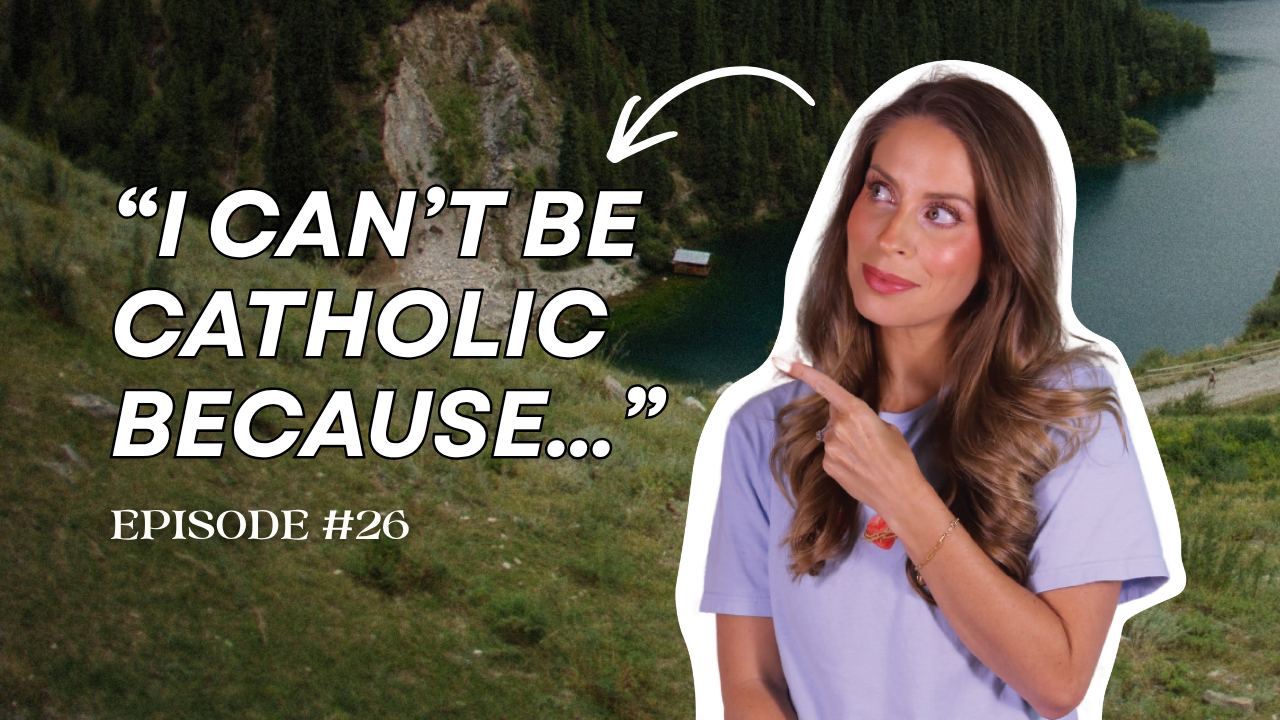
If you'd like to hear more about my personal journey and the experiences that inspired these reflections, I invite you to listen to this episode of the Lighten Up Podcast. I share more of the story behind the questions I've been wrestling with, why this process has been both challenging and life-giving, and what I've learned about trusting God even when the road ahead feels unfamiliar.
My prayer is that all of us, no matter where we are in our walk with Christ, would have the humility to keep learning, the courage to keep seeking, and the faith to follow Him wherever He leads.



FOLLOW ME ON INSTAGRAM