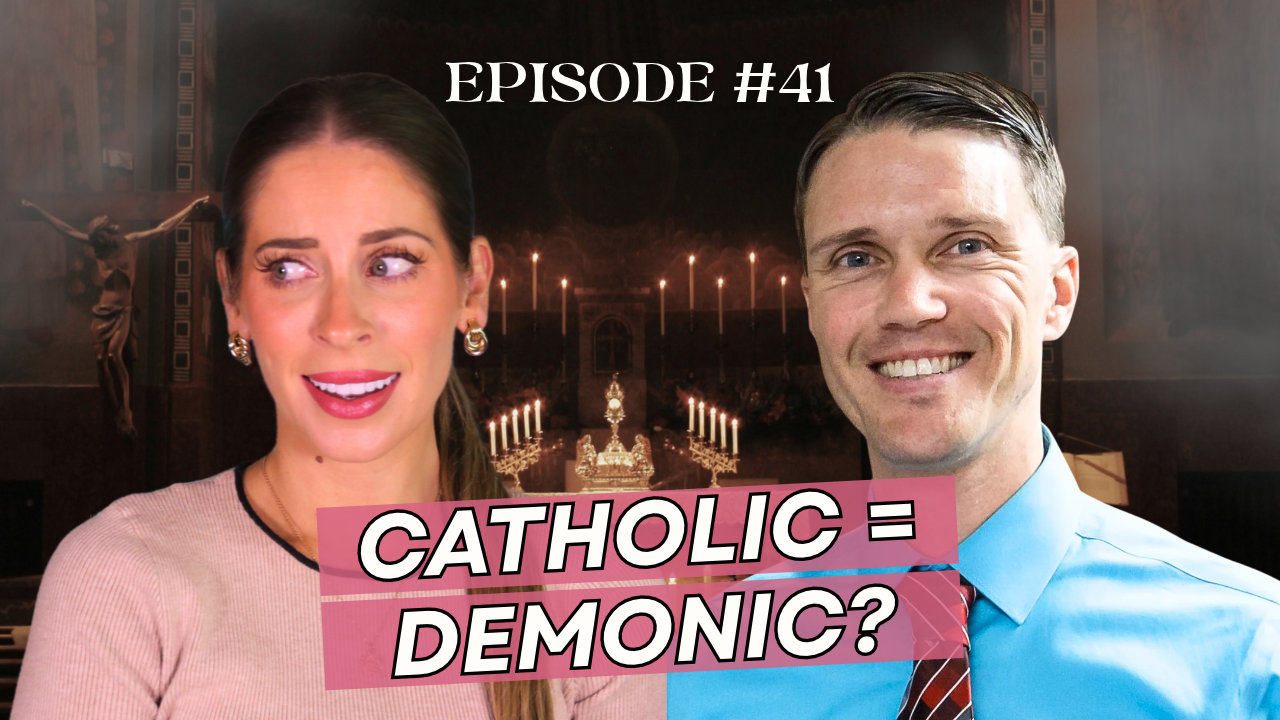
What If Everything You've Heard About the Catholic Church Isn't True?
Have you ever stopped to consider how much of what you believe about Christianity comes from what you've personally studied and how much comes from what you've always been told?
For most of us, our understanding of faith begins long before we're old enough to really examine it. We grow up in churches, listen to sermons, learn how to interpret Scripture, and develop certain ideas about what Christianity is supposed to look like. Eventually, those ideas become so familiar that we rarely stop to question them.
I've been thinking about this quite a bit as I've spent more time studying the history of Christianity and the beliefs of the earliest Christians. One of the most surprising parts of that process has been realizing how many things I thought I understood about the Catholic Church were based on assumptions I'd never really investigated.
And once I started asking questions, I discovered that there was so much more to the conversation than I had realized.
Why Do We Believe What We Believe?
Something I've noticed is how easily we can confuse familiarity with understanding.
When you've heard something repeated throughout your life, it starts to feel like common knowledge. You may have heard that Catholics worship Mary, that praying the Rosary is unbiblical, or that the Catholic Church teaches salvation through good works. Maybe you've even repeated some of those things yourself.
I know I had heard plenty of accusations about Catholicism before I ever took the time to understand what Catholics actually believe.
But how often do we stop and ask whether those claims accurately represent the teachings of the Church?
It's easy to form an opinion about something when you've only heard one perspective. And when that perspective comes from people we respect, especially pastors, teachers, or family members, we don't necessarily feel the need to investigate further.
I don't think most people intentionally misunderstand another Christian tradition. Many are simply repeating what they've been taught, just as I did.
But if we're going to make claims about what someone else believes, shouldn't we first make sure we actually understand their beliefs?
What Scripture Says About Listening Before Answering
One passage that has been meaningful to me throughout this process is Proverbs 18:13:
"If one gives an answer before he hears, it is his folly and shame."
I think about how often we approach theological conversations with our responses already prepared. Someone mentions a belief that challenges our understanding of Scripture, and we're immediately thinking about how to correct them.
Sometimes we haven't even finished listening before we've decided they're wrong.
And I understand why that happens. Our faith is deeply personal, and when something challenges beliefs we've held for years, it can feel uncomfortable. We naturally want to defend what we know.
But Scripture repeatedly calls us to pursue wisdom and understanding. That requires a willingness to listen, especially when the conversation involves something unfamiliar.
I've found that some of the most meaningful things I've learned have come from taking the time to investigate questions I once thought had obvious answers.
What I've Learned From Studying Early Christianity
One of the biggest changes in how I've approached these questions has come from studying Church history.
For a long time, I didn't realize just how much we could learn about Christianity by looking at what believers taught and practiced in the centuries immediately following Jesus and the apostles.
When I began reading about the early Church, I started encountering beliefs and practices that were surprisingly familiar to Catholic Christians today.
The Eucharist is one example.
Growing up in a Protestant environment, I was familiar with understanding communion primarily as a symbolic remembrance of Jesus' sacrifice. But as I began learning about the early Christians and their understanding of the Eucharist, I realized that the historical conversation was much more extensive than I had known.
That led me back to passages like John 6, where Jesus speaks about giving His flesh for the life of the world.
The more I studied, the more questions I had about how the earliest Christians understood those words and why their understanding mattered.
I began to realize that if I wanted to understand Christianity more fully, I needed to take seriously what the earliest Christians believed about their faith.
And that has opened the door to so many conversations I never expected to have.
Why Understanding Catholic Beliefs Matters
One of the things that has surprised me most is how different certain Catholic teachings are from the way they're sometimes described by people outside the Church.
Take the accusation that Catholics worship Mary and the saints.
If you've only ever heard that Catholics pray to Mary because they believe she's divine, I can understand why that would be concerning. Christians are called to worship God alone.
But when you actually examine Catholic teaching, you discover that the Church distinguishes between worship, which belongs to God alone, and asking the saints to intercede in prayer.
Whether someone agrees with that practice is a separate theological conversation, but it's important to understand what Catholics actually mean before criticizing it.
The same principle applies to questions about statues, confession, the Rosary, and the Eucharist.
These are significant theological topics, and they deserve more than a quick explanation or a reaction to something we saw online.
Being Willing to Ask Difficult Questions
I know that reconsidering something you've believed your entire life can feel overwhelming.
Our beliefs are often connected to people we love, churches that shaped us, and experiences that have been deeply meaningful. Asking questions about those beliefs can sometimes feel like questioning all of those relationships and experiences, too.
But I don't believe that pursuing a deeper understanding of Christianity requires us to dismiss the good things we've learned along the way.
I've become increasingly grateful for the people who helped me know and love Jesus, even as I've continued studying questions that weren't necessarily part of my upbringing.
And I've learned that there's a lot of humility involved in being willing to admit that you may not have understood something as fully as you thought.
Sometimes that means reading a passage of Scripture again with fresh eyes. Sometimes it means learning from Christians who lived centuries before us. And sometimes it means sitting down with someone whose beliefs are different from yours and genuinely listening to what they have to say.
We don't need to be afraid of asking questions when our desire is to know God more deeply.
Keep Seeking Truth
If there's one thing I hope you'll take away from this, it's the importance of being willing to examine what you believe.
Ask questions. Read Scripture carefully. Learn about the history of the Church. And when you encounter a belief that seems unfamiliar or even concerning, take the time to understand it before forming a conclusion.
I know firsthand how much there is to discover when we're willing to approach these conversations with humility.
My prayer is that we would continue growing in our understanding of God, allowing our love for Him to shape the way we seek truth and the way we treat others along the way.




FOLLOW ME ON INSTAGRAM