What Does Healthy Christian Love Actually Look Like?
I have been thinking a lot lately about what our culture has taught us to expect from love.
We have more ways to meet people than ever before. We can swipe through hundreds of potential relationships from our phones, follow couples online, watch relationship advice videos, and hear endless opinions about what we should and should not accept from another person.
And yet, so many people seem to be struggling to find, understand, and maintain healthy relationships.
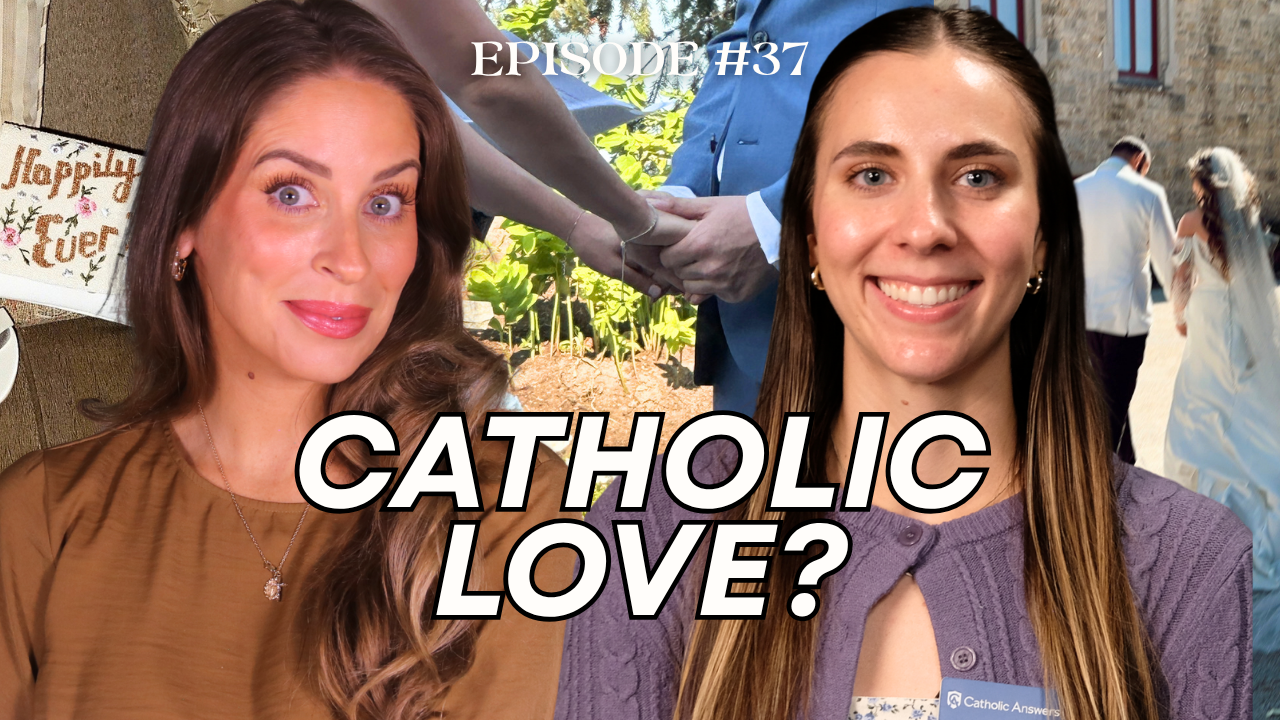
I recently had Emily Dinnany back on the Lighten Up podcast, and our conversation got me thinking about this in a deeper way. We talked about dating, marriage, commitment, healing from past wounds, cohabitation, sexual relationships, and the many ways our culture has changed the way we think about love.
But underneath all of those conversations was a much bigger question:
Do we actually understand what love is?
Because if we do not understand love, it becomes very difficult to recognize it, give it, or receive it well.
We Have Confused Love With a Feeling
One of the biggest problems I see in our culture is that we have reduced love to how someone makes us feel.
If the relationship feels exciting, we assume it must be right. If the butterflies disappear, we start wondering if something is wrong. If our spouse frustrates us, we wonder whether we chose the wrong person. If dating becomes difficult, we assume the right person must still be out there somewhere.
But Christian love has always been much bigger than a feeling.
Feelings are important. They tell us something about what is happening inside of us, and I do not think we should ignore them. But feelings are also constantly changing.
Love requires something deeper.
It requires a willingness to choose another person, serve another person, forgive another person, communicate with another person, and sometimes allow another person to challenge us.
That last one can be particularly uncomfortable.
We tend to want relationships that affirm us exactly as we are. We want someone who understands us, accepts us, supports us, and makes us feel good.
There is certainly beauty in being known and accepted. But a healthy relationship should also help us become more loving, patient, selfless, honest, and mature.
That kind of growth does not always feel good.
Sometimes the person closest to you is the person who sees the parts of you that you would rather ignore.
And sometimes that is a gift.
Marriage Is Meant to Form Us
I loved hearing Emily talk about how she and her husband approached marriage with an understanding that they were both going to continue growing.
That is such an important distinction.
When you marry someone, you are not marrying a finished product.
You are marrying a person who will change throughout the course of your life, just as you will.
The person you marry at 25 will experience things at 35 that they could never have predicted at 25. You will both change careers, experience loss, develop new interests, encounter challenges, mature in your faith, and hopefully grow in virtue.
Your marriage will have to grow with you.
That means we should be careful about expecting another person to check every box before we commit to them. Of course, there are serious issues that should never be ignored, and wisdom matters tremendously when discerning marriage. But there is a difference between recognizing legitimate concerns and expecting another person to be completely free from flaws.
Everyone has flaws.
I certainly do.
You do, too.
Marriage gives us an opportunity to confront those flaws with someone who has committed to walking alongside us.
That can be uncomfortable, but it can also be deeply sanctifying.
We Need to Stop Being Afraid of Growth
I think our culture has become increasingly uncomfortable with the idea that relationships should require us to change.
You will hear people say things like, “Never change for someone else.”
There is truth in that. You should never have to become someone you are not in order to earn another person's love.
But there is a huge difference between changing your identity and allowing yourself to grow.
If I am selfish, I should want to become less selfish.
If I am terrible at communicating, I should want to become a better communicator.
If I have unhealthy habits, I should be willing to examine them.
If I have a tendency to shut down whenever I am hurt, I should want to learn how to communicate instead of expecting everyone around me to simply work around that behavior.
Love gives us a reason to become more generous, more patient, more honest, and more willing to serve.
That does not mean our spouse is responsible for fixing us. It means that being deeply known by another person often exposes areas where God is inviting us to grow.
And that can be one of the most beautiful parts of a lifelong relationship.
Sometimes the Small Things Need to Be Addressed
Emily gave a piece of marriage advice that has really stuck with me:
Do not let small things become big things.
There are two sides to this.
Sometimes something really is small, and we need to extend grace.
Your spouse had a long day. They were short with you. They forgot something. They made a mistake.
If you can genuinely let it go, let it go.
We do not need to turn every imperfect moment into a major conversation.
But there are also small things that keep happening.
A comment that continues to hurt.
A habit that creates tension.
A conversation you keep avoiding.
A growing sense of resentment that you keep telling yourself is no big deal.
Those things eventually become bigger.
Healthy relationships require the humility to know the difference between something that should be released and something that needs to be lovingly addressed.
That takes communication, patience, and a willingness to be vulnerable.
It also takes the humility to consider that we might not always be completely right.
Your Past Can Affect the Way You Love
One of the parts of our conversation that really stayed with me was our discussion about wounds.
You can love Jesus deeply and still have wounds.
You can pray every day and still have things from your childhood that affect the way you communicate.
You can go to Mass, read Scripture, and love the Lord while still carrying insecurity, fear of rejection, unhealthy relationship patterns, or unresolved trauma.
Being a Christian does not mean pretending those things do not exist.
Sometimes healing involves prayer and the sacraments. Sometimes it involves wise friendships and honest conversations. Sometimes it also involves professional counseling.
I think Christians can sometimes be hesitant to talk about therapy because they are afraid it means we are replacing God with psychology.
I do not believe it has to be either-or.
God created us as whole people. We have spiritual, emotional, physical, and relational needs. There can be tremendous value in inviting wise, qualified people into the places where we need help.
Emily shared how both she and her husband had done individual counseling before they were married. It gave them tools for communicating, processing emotions, and understanding some of the wounds they each carried into their relationship.
That kind of preparation matters.
If you are struggling with something from your past, you do not have to wait until it destroys a relationship before you address it.
You are allowed to seek healing now.
Christian Dating Should Prepare Us for Love, Not Just Help Us Find Someone
This is one reason I found the book Emily was sharing about so interesting.
YOUCAT Love Forever approaches questions about dating, marriage, sexuality, family, and relationships in a very practical way. Instead of only addressing the big theological questions, it gets into the everyday situations people actually wonder about.
How do I know if someone is right for me?
How do I end a relationship respectfully?
What do I do if my boyfriend or girlfriend does not seem ready for marriage?
How do I deal with wounds from my past?
What happens when the romantic feelings fade?
How do I navigate difficult relationships with in-laws?
These are the questions people are actually asking.
And I think we need more spaces where Christians can ask them without feeling embarrassed.
We should be able to talk about relationships honestly before we make lifelong commitments.
Dating should give us an opportunity to discern whether we can build a life together, not simply determine whether we have enough chemistry to keep dating.
That means conversations about faith, finances, children, family, conflict, communication, vocation, sexuality, expectations, and the kind of life you both hope to build.
Those conversations may not feel particularly romantic.
They can still be incredibly important.
Love Requires Commitment
There is another part of this conversation that I think our culture desperately needs to recover: the idea that love involves commitment.
We have become very good at building relationships that resemble marriage without actually making the commitment of marriage.
Couples live together. They combine finances. They share pets. They buy homes. They sleep together. Sometimes they even have children together.
And yet, there can still be an underlying feeling of, “If this doesn't work out, we can leave.”
I understand why that can feel appealing.
Commitment is scary.
It means saying yes when you cannot predict everything that will happen in the future.
But that is also what makes commitment meaningful.
Christian marriage is not simply a legal contract or a romantic milestone. It is a covenant.
You are saying, in front of God and your community, that you are giving yourself to this person and choosing faithfulness.
That kind of love requires sacrifice.
It requires forgiveness.
It requires patience.
It requires the humility to say, “I was wrong.”
It requires the courage to say, “This hurt me, and we need to talk about it.”
And it requires choosing love even during seasons when love does not feel particularly romantic.
What If We Started Asking a Different Question?
I think one of the most helpful shifts we can make in our approach to relationships is changing the question we are asking.
Instead of only asking, “Is this person making me happy?” we can ask, “Are we helping each other become more loving?”
Instead of asking, “Does this relationship feel easy?” we can ask, “Are we willing to learn how to handle difficult things well?”
Instead of asking, “Does this person meet every expectation I have?” we can ask, “Are we both willing to grow?”
And instead of looking only at someone else's flaws, we can occasionally turn the question toward ourselves.
Lord, what are You trying to show me through this relationship?
That question can be humbling.
It can also be transformative.
Because the goal of Christian love is not simply to find someone who makes our life comfortable. We are called to love as Christ loves us, and that kind of love changes us.
It asks us to become more selfless.
More patient.
More forgiving.
More truthful.
More willing to sacrifice.
More willing to receive grace.
And that is a beautiful thing to build a life around.
Whether you are single and hoping to find someone, dating and trying to discern your future, engaged and preparing for marriage, or already married and realizing there are areas where you still need to grow, I hope you know that you are not behind.
You do not have to have every answer today.
But you can start being honest about where you are, invite God into the process, seek wise counsel when you need it, and become the kind of person who is capable of giving and receiving the kind of love you are praying for.
That is work worth doing.
And I think it is work worth doing long before the wedding day.



FOLLOW ME ON INSTAGRAM