What If Scripture Asks You to Change Your Mind?
Have you ever believed something for so long that you never stopped to ask where that belief actually came from?
I have.
I think most of us have. We inherit beliefs from our families, our churches, our pastors, our communities, and the people who discipled us. We learn how to read Scripture from people we trust, and over time, certain interpretations can become so familiar that they begin to feel synonymous with the Bible itself.
Then, every once in a while, we come across something that makes us stop and ask, Wait. Is that actually what Scripture says?
That question can be uncomfortable, especially when the answer might require us to rethink something we have believed for years.
But I have started to believe that there is something deeply faithful about being willing to ask.
What if being faithful means being willing to learn?
One of the things I have been thinking about recently is how easy it is to confuse familiarity with truth.
If I have heard something my entire life, I can begin to assume that it must be biblical simply because I have heard it so many times. And if everyone around me believes the same thing, questioning it can feel almost disloyal.
But Jesus never told us to stop seeking once we became Christians.
He told us to seek, to ask, and to knock.
“Ask, and it will be given to you; seek, and you will find; knock, and it will be opened to you.” Matthew 7:7
That requires a certain amount of humility because seeking means admitting that there may still be things we do not understand.
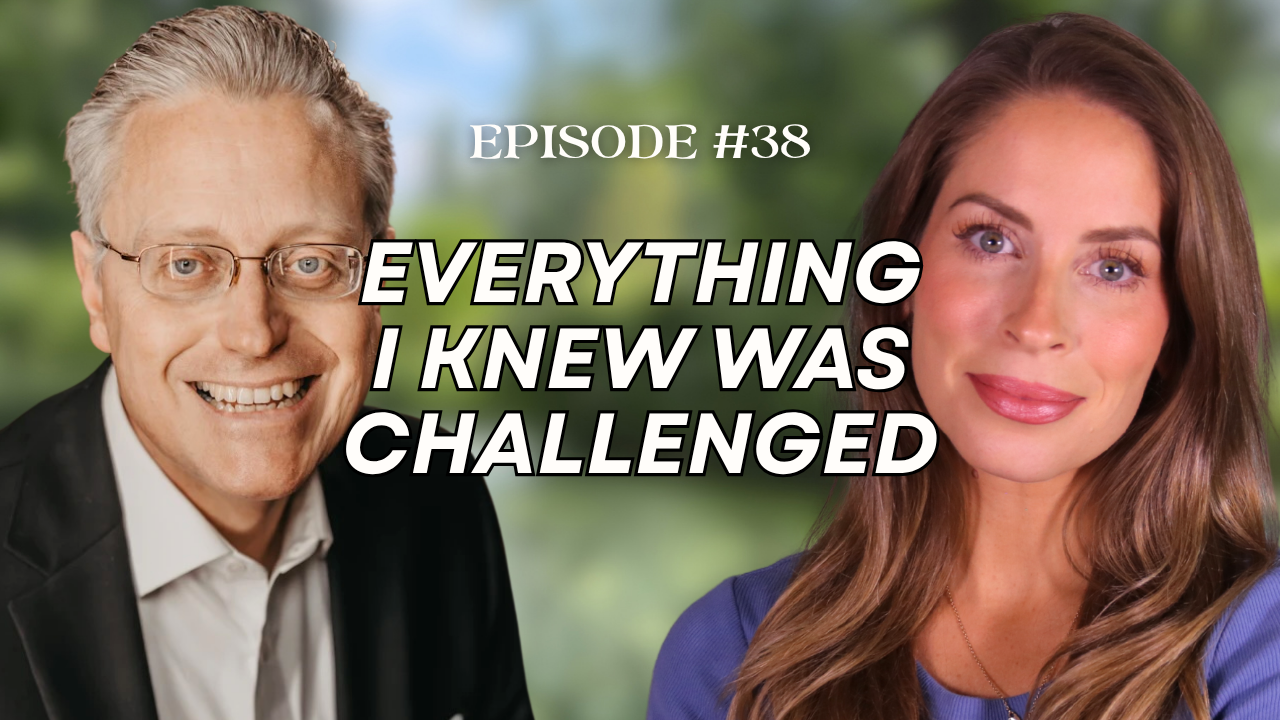
I was reminded of this while talking with Dr. John Bergsma, whose journey to Catholicism began from a place that was about as far from Catholicism as you could imagine. He grew up in a deeply Protestant, Dutch Calvinist family and eventually became a Protestant pastor himself. Catholicism was not simply something he had never considered. He had been taught very strong objections to the Catholic faith, including the belief that the Mass was idolatrous.
And yet, as he continued studying Scripture and the early Christian Church, he became willing to question some of the assumptions he had always carried.
That willingness changed everything.
The question behind sola scriptura
One of the biggest questions Dr. Bergsma had to wrestle with was the idea of sola scriptura, the belief that Scripture alone is the Christian's ultimate authority.
If you grew up Protestant or evangelical like I did, you may have heard this idea so often that it can feel completely obvious. Of course Scripture is our authority. Of course we should base our beliefs on the Bible.
I completely agree that Scripture is the Word of God and that we should take it seriously.
The question is a little different: Does Scripture itself teach that Scripture is the only authority we have?
That distinction is what really began to challenge Dr. Bergsma.
At one point, a Catholic friend asked him to show him a passage of Scripture that actually taught sola scriptura. John immediately thought of 2 Timothy 3:16, which says that all Scripture is God-breathed and useful for teaching, correcting, rebuking, and training in righteousness.
It is a beautiful passage about Scripture.
But when John looked at it again, he realized that the passage does not actually say that Scripture is the only authority.
That realization led him to a question that I think is worth asking ourselves, too: What does the Bible actually say about tradition?
And that is where things get really interesting.
Does the Bible have anything positive to say about tradition?
For many of us, the word “tradition” can immediately sound suspicious.
We hear “tradition” and think about man-made rules, religious customs, or practices that have accumulated over time. We may have even been taught that following tradition is the opposite of following Scripture.
But Scripture itself uses the word differently.
In 2 Thessalonians 2:15, St. Paul tells Christians to stand firm and hold fast to the traditions that were handed on to them, whether by word or by letter. Dr. Bergsma described this as a major turning point in his own study because he realized that St. Paul was positively commending the Christian tradition that had been handed down.
This raises an important question: What if Scripture and tradition were never meant to be enemies?
What if the early Christians understood the faith as something they had received and were responsible for faithfully handing on?
That was the question that sent John deeper into the writings of the early Church.
Why the early Church matters
I think one of the most fascinating parts of studying Christianity is realizing just how close the early Christians were to the apostles.
We are living roughly two thousand years after the New Testament was written. We have countless translations, commentaries, denominations, study Bibles, podcasts, sermons, books, and opinions available to us.
The early Christians did not have any of that.
They were much closer to the people who had actually heard the apostles preach, and they were trying to faithfully preserve what they had received.
That matters when we are trying to understand what the first Christians believed.
Dr. Bergsma talked about discovering the writings of the early Church Fathers, including St. Ignatius of Antioch. Ignatius lived extremely close to the apostolic age and wrote about the Eucharist as the flesh of Jesus Christ. That was significant for John because it challenged the way he had previously understood passages such as John 6.
And this is one of the things I love about studying the early Church: sometimes you find that the questions we think are uniquely modern have actually been asked for centuries.
St. Vincent of Lerins, writing in the fifth century, wrestled with the problem of biblical interpretation. His concern was simple: if everyone reads Scripture independently and reaches completely different conclusions, how do we know which interpretation is faithful to what the apostles actually taught?
His answer pointed back to the Church's received interpretation and tradition.
That doesn't diminish Scripture.
It makes me appreciate just how much richer Scripture becomes when we understand it within the faith of the people who received it, preserved it, and passed it down.
Scripture and tradition are more connected than we realize
One example Dr. Bergsma brought up really stuck with me: the Bible itself does not contain its own table of contents.
There is no single book of the Bible that gives us a complete list and says, “These are all of the inspired books that belong in Scripture.”
So how do we know which books belong in the Bible?
That knowledge was received and handed down through the early Church before it was formally defined through Church councils. In other words, the very collection of books we call “the Bible” depends on a history of Christian tradition and discernment.
I find that fascinating because it challenges the idea that Scripture and tradition are two completely separate things competing for our attention.
They have been intertwined from the beginning.
At the same time, there is an important distinction to make. Catholicism does not treat every custom or devotional practice that has developed throughout Christian history as a binding doctrine. Dr. Bergsma explained the distinction between capital-T Tradition, meaning the truths of the faith handed down from the apostles, and small-t traditions, which can include customs and devotional practices that develop within the life of the Church.
That distinction helped me understand the conversation so much better.
The question isn't simply, “Is this a tradition?”
The better question is, What kind of tradition are we talking about, and where did it come from?
What happens when the truth costs you something?
There is another part of conversion that we do not always talk about.
Sometimes discovering something new about the faith is exciting. You find a beautiful truth you had never understood before, and you cannot wait to tell everyone about it.
But sometimes following truth comes with a cost.
For Dr. Bergsma, becoming Catholic meant reconsidering beliefs that were deeply connected to his family, his education, his career, and his identity. He had spent years as a Protestant pastor and professor. He wasn't casually switching denominations because he liked a different style of worship.
He was asking whether he was willing to follow what he believed to be true, even if it meant losing things that were deeply familiar.
I understand that tension.
When I began exploring Catholicism, I knew that telling people about it could be difficult. I had spent years creating Christian content online, and the thought of ruffling feathers or disappointing people I loved was genuinely hard.
But there comes a point in any journey of faith where we have to decide what we actually want.
Do I want to protect my image and stay comfortable?
Or do I want to know the truth, even if knowing the truth requires me to change?
That is a much harder question.
Sometimes we have to be willing to say, “What if I'm wrong?”
I think this may be one of the hardest prayers we can pray:
“Lord, if I am wrong about something, please show me.”
It sounds simple, but it requires a lot of humility.
It means we are giving God permission to challenge our assumptions. It means we are willing to open Scripture without deciding ahead of time what it must say. It means we are willing to learn from Christians who came before us, even when their beliefs make us uncomfortable.
And it means we are willing to follow truth even when the road ahead is unfamiliar.
That doesn't mean we should believe every new idea we encounter. Discernment matters. Scripture matters. The teachings of the Church matter. History matters. Good questions matter.
But fear should never be the thing that keeps us from seeking.
Jesus is not threatened by our questions.
He is not threatened by our desire to understand.
He is not threatened when we discover that something we once believed was incomplete.
If He is the Truth, then we can trust Him enough to seek the truth.
What suffering taught me about following Jesus
There was another part of my conversation with Dr. Bergsma that has stayed with me, and it had nothing to do with apologetics.
It was suffering.
John and his wife lost their seventeen-year-old son after a two-year battle with brain cancer. As they walked through that devastating season, his wife was learning about the Catholic understanding of redemptive suffering through the women she had met in a rosary group.
I was deeply moved by the way John described what suffering had taught their family.
He explained that Christians are called to participate in Christ's sufferings. This does not mean that Jesus' sacrifice was incomplete or that we somehow need to finish the work of the cross. Rather, our participation in what Christ has done is something we are invited to enter into.
Paul writes about sharing in Christ's sufferings, and Jesus tells His followers to deny themselves, take up their crosses, and follow Him.
That is a difficult truth, especially when suffering is not something we would ever choose.
John said that he would never have chosen the suffering his family experienced. Yet, looking back, he could see ways that God had grown their understanding of love, Himself, and other people through that painful journey.
I don't think that means we have to pretend suffering is good or that we should be grateful for terrible things happening to us.
It means we can trust that God is capable of bringing something beautiful out of what we never would have chosen.
There are parts of Christ's heart we may only learn to understand when we walk through suffering ourselves.
And perhaps that is part of what it means to follow Him wherever He leads.
Keep seeking
If there is one thing I hope you take away from all of this, it is that you do not have to be afraid of seeking.
If you have a question about your faith, bring it to Jesus.
Open your Bible and actually read the passage in context. Study the early Christians. Ask where a belief came from. Talk to people who have spent years studying these questions. Pray for wisdom. Be willing to discover that you misunderstood something.
And then, perhaps most importantly, be willing to follow wherever the truth leads.
I have found that the more I learn about the Catholic faith, the more I realize that becoming Catholic was never about abandoning Scripture. It was about discovering a deeper way of understanding Scripture within the faith of the Church that came before me.
That has been one of the most beautiful parts of this journey for me.
Sometimes you learn something that makes you say, “How did I never see this before?”
And once you see it, you cannot unsee it.
But instead of being afraid of that experience, I want to receive it as an invitation to know Jesus more deeply.
Because He is worth seeking.
He is worth every question.
He is worth every uncomfortable conversation.
And He is worth following wherever He leads.
Lighten up! There's so much joy in Jesus.



FOLLOW ME ON INSTAGRAM