The Evil We Don’t Want to See (But Have To)
There are some conversations we avoid.
Not because they’re unimportant…
But because they’re uncomfortable.
Heavy.
Disturbing.
The kind of thing that makes you want to look away and say, “Not today.”
But here’s the truth:
What we refuse to look at doesn’t disappear.
It just grows in the dark.
The Reality We’d Rather Ignore
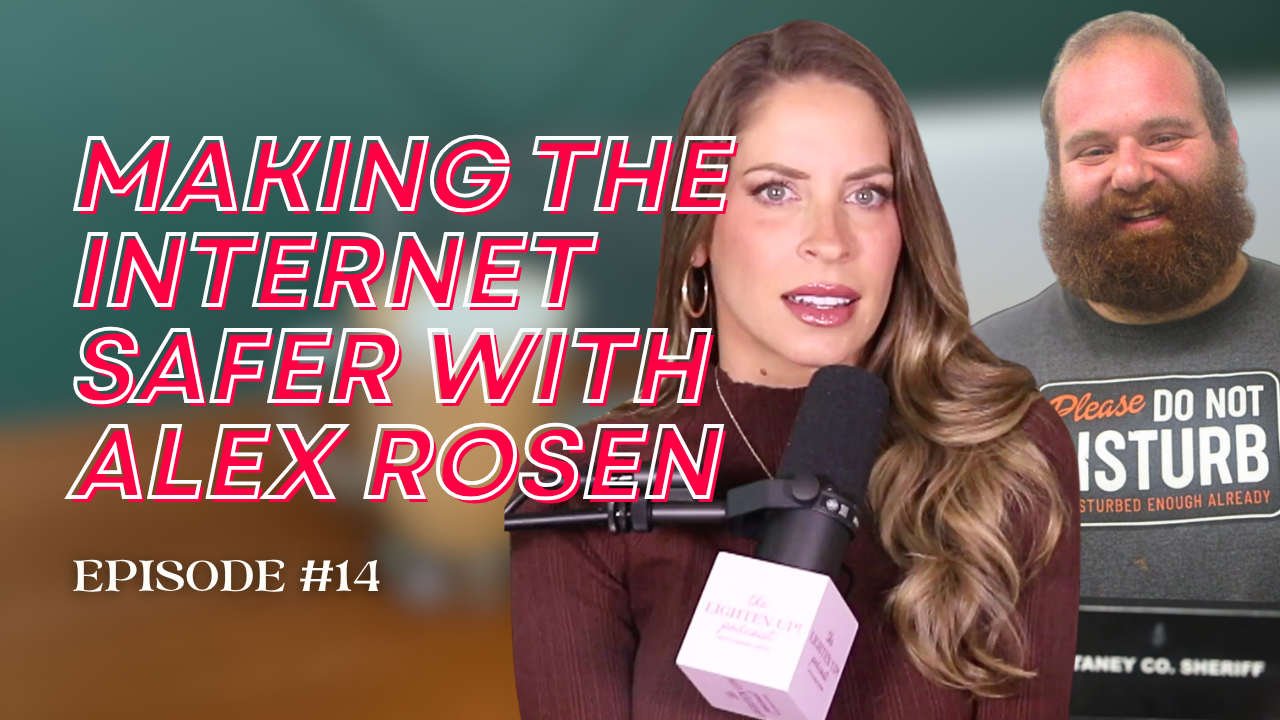
In a recent conversation, Hannah sat down with Alex Rosen—a 26-year-old who has spent the last seven years confronting one of the darkest realities of our world: online child exploitation.
And if you’re expecting this to feel distant… rare… or “not something that happens around here,” you might want to brace yourself.
Because one of the most sobering truths he shared is this:
These people aren’t hard to find.
They’re everywhere.
Not in some far-off corner of the internet.
Not hidden behind layers of secrecy.
They’re on the same apps.
The same platforms.
The same digital spaces our kids scroll through every single day.
And that’s not fear-mongering.
That’s reality.
Why We Look Away
Hannah said something in the conversation that hit like a punch to the gut:
“People would rather bury their heads in the sand… because it’s too disturbing.”
And honestly? That makes sense.
Because facing this means admitting:
Evil doesn’t always look evil
Danger doesn’t always feel dangerous
And “normal” people can be hiding deeply broken intentions
It’s not just the stereotypical “creepy guy.”
It’s people with jobs.
Families.
Positions of trust.
People in schools.
In churches.
In communities.
And that’s exactly why we avoid it.
Because if we fully accept that truth…
It changes how we see everything.
The Strategy of Darkness
One of the most eye-opening parts of this conversation was understanding how these predators operate.
They’re not just randomly targeting.
They’re intentional.
They look for:
Vulnerability
Loneliness
Lack of parental involvement
Absence of a strong protective presence
Alex shared that when posing as a child online, they never present a scenario where a strong, present parent is involved.
Why?
Because predators are far less likely to engage when they sense protection.
They’re not just hunting children.
They’re hunting access.
The Lie of “It Won’t Happen to Us”
There’s a quiet assumption many people carry:
“My kids are fine.”
“We live in a good area.”
“They’re smart—they would never fall for that.”
But here’s the hard truth:
This isn’t about intelligence.
It’s about exposure.
You cannot be targeted by an online predator if you’re not online.
And yet… we’ve normalized handing kids unlimited, unsupervised access to the internet—often at younger and younger ages.
Not because we don’t care.
But because it’s convenient.
Because “everyone else is doing it.”
Because we don’t fully understand the risks.
Protection Starts at Home
If there was one clear takeaway from this conversation, it’s this:
Prevention isn’t complicated—but it does require intention.
It looks like:
Being actively involved in your child’s digital life
Knowing who they’re talking to
Setting boundaries around social media and device usage
Creating an environment where your kids feel safe telling you anything
And maybe most importantly…
Being present.
Because predators are looking for gaps.
And presence fills them.
The Weight of Awareness
There’s something else Alex shared that’s worth sitting with.
It’s not just the evil itself that weighs on him.
It’s the volume of it.
The sheer number of cases.
The constant exposure.
The realization that this isn’t a rare problem—it’s a widespread one.
And that can feel overwhelming.
But here’s where we have a choice:
We can let that overwhelm push us into denial…
Or we can let it move us toward awareness.
Light Doesn’t Ignore Darkness
Faith doesn’t call us to pretend evil doesn’t exist.
It calls us to bring light into it.
And light requires awareness.
It requires courage.
It requires a willingness to say:
“This is uncomfortable… but it matters too much to ignore.”
Because protecting the vulnerable has always been close to God’s heart.
And in a world where darkness tries to hide…
Awareness becomes an act of love.
Final Thoughts
You don’t have to do what Alex does.
You don’t have to confront predators face-to-face or build cases against them.
But you are called to steward what’s been entrusted to you.
Your home.
Your influence.
Your children (or the children in your life).
And sometimes, stewardship looks like having the conversations we’d rather avoid.
Not to live in fear…
But to live with wisdom.
Because what we shine light on loses its power to hide.
And that matters more than our comfort ever will.




FOLLOW ME ON INSTAGRAM